Source Diesel Generator Crankshaft Position Sensor for Engines, Repair, and Maintenance
Find 30 diesel generator crankshaft position sensor options from verified suppliers. Compare specifications, prices, and certifications to select the right component for engine repair and maintenance applications.
Key considerations
Products List


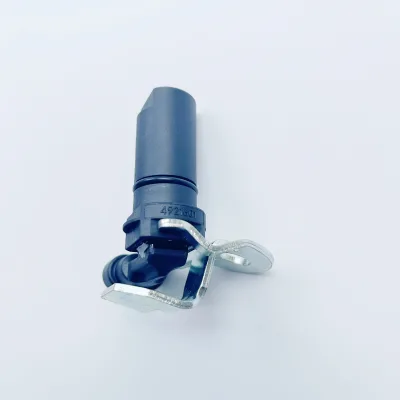


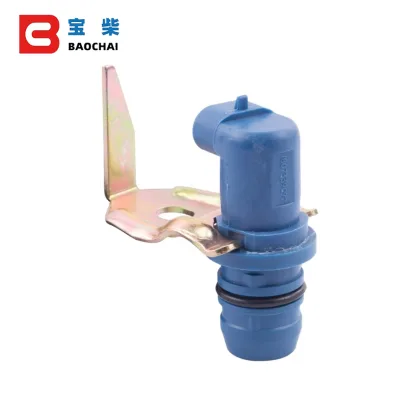


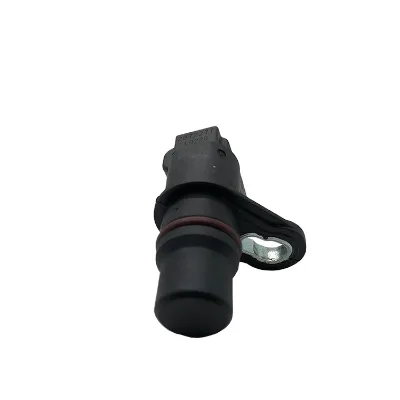

Comprehensive Sourcing Guide
Strategic Sourcing Guide for Diesel Generator Crankshaft Position Sensors
Understanding Component Variability and Technical Specifications
When sourcing a diesel generator crankshaft position sensor, buyers must first navigate a complex landscape of technical attributes that often vary significantly between listings. The core keyword suggests a specific application, yet the available data reveals a fragmented market where product descriptions sometimes conflate distinct component types. For instance, while the target application is a diesel generator, observed product attributes include references to "Crankshaft Shape" being listed as "Crankshaft," which is technically a misnomer for a sensor, as the sensor itself is a device, not a rotating shaft. This highlights the critical need for buyers to verify the actual component function rather than relying solely on title keywords.
The technical specifications provided in the market data show a divergence in construction and output. Some listings describe the component as a "Semiconductor Type" with a "Digital Type" output signal, which is typical for modern electronic engine management systems. In contrast, other entries reference "Normal Wirewound" production processes, suggesting a different internal mechanism that may be less common in high-precision diesel applications. Furthermore, the material composition varies, with "Aluminum" cited as a primary material for the housing in some instances, while other attributes mention "Ceramic Pressure Transmitter" contexts, which may indicate a mismatch in the listing data or a multi-purpose sensor design.
Buyers must also scrutinize the wiring and connection details. The observed data includes "Five-Wire" configurations and "M" thread types, which are specific physical constraints that must match the generator's engine block. The absence of a universal standard in the provided attributes means that a sensor listed with "Five-Wire" capability may not be compatible with a generator requiring a three-wire setup. The "IP Rating" of IP22 is another specific observation, indicating a protection level against solid objects larger than 12.5mm but offering no protection against water, which might be insufficient for outdoor generator applications. Consequently, the primary technical task is to cross-reference the engine's specific requirements against the "Model Number" and "OE No." (such as 0281002315 or 5594275) rather than assuming compatibility based on the generic product name "Crankshaft Position Sensor."
Compliance, Certification, and Regulatory Standards
In the global B2B market, particularly for automotive and industrial components like diesel generator sensors, compliance is not merely a formality but a prerequisite for operational safety and legal importation. The observed market data presents a wide array of certifications, including "CCC," "COP," "ISO9001," "CE," "E-Mark," "RoHS," "TS16949," and "TSRoHS." While these acronyms represent significant quality benchmarks, the presence of multiple, sometimes overlapping, certification lists in a single product description requires careful verification. For example, "TS16949" (now IATF 16949) is a critical automotive quality management standard, while "E-Mark" is specifically required for components sold within the European Economic Area.
Buyers must distinguish between a supplier's general company certification and the specific certification of the individual batch of sensors. The data indicates that some products are listed with "ISO 9001" certificates, which validates the supplier's quality management system but does not guarantee that every specific sensor unit meets the rigorous durability standards required for diesel engines. The "CCC" (China Compulsory Certification) is mandatory for products sold within China, but its relevance for export depends on the destination country's regulations. Similarly, "RoHS" compliance ensures the absence of hazardous substances, which is increasingly a legal requirement in many jurisdictions.
The "Standard Component" designation in the data suggests that these parts are intended to meet industry norms rather than being proprietary or custom-engineered. However, the presence of "Customization: Available" alongside "Non-Customized" options in different listings indicates a split in the supply chain. Some suppliers offer standard off-the-shelf units, while others provide tailored solutions. For a diesel generator application, where engine timing is critical, relying on a "Standard Component" without verifying its specific certification for the target market can lead to compliance failures. Buyers should request valid, current certificates for the specific model number being purchased, rather than accepting a generic list of certifications associated with the supplier's brand.
Cost Drivers and Pricing Structure Analysis
The pricing structure for diesel generator crankshaft position sensors is influenced by a variety of factors, ranging from material costs to logistical complexities. The observed price range in the market spans from 1 to 2000 USD, a variance that is unusually wide for a single component type. This disparity often reflects differences in quality tiers, brand reputation, and the inclusion of ancillary services such as warranty or packaging. A unit priced at the lower end of this spectrum may be a generic aftermarket part, while a unit at the higher end could be an "Original" quality part with extensive testing and certification.
Several specific attributes directly impact the final cost. The "Quality" designation varies between "Brand New," "Original," and "100% Tested." "Original" parts, which are often manufactured by the original equipment manufacturer (OEM) or their authorized partners, typically command a premium price due to their guaranteed compatibility and reliability. In contrast, "Brand New" parts may be aftermarket replacements that, while functional, might not offer the same level of precision or longevity. The "Weight" of the product, observed at 8.166kg for some listings, is another cost driver. Heavier components incur higher shipping costs, especially when using air freight or expedited services like DHL or FedEx, which are frequently cited as delivery options.
Packaging also plays a role in cost determination. The data mentions "Original Packing," "Neutral Packing," and "Customized Packing." Customized packaging, which might include specific branding or protective measures for high-value shipments, adds to the unit cost. Additionally, the "MOQ" (Minimum Order Quantity) ranges from 1 PC to 100 units, with specific listings showing 1-6 PCS or 4 PCS. Suppliers with lower MOQs often charge a higher unit price to cover the administrative and logistical overhead of handling small orders. Conversely, bulk purchases may benefit from economies of scale, though the data does not explicitly confirm tiered pricing structures. Buyers must weigh the initial unit price against the total cost of ownership, including shipping, potential return costs, and the risk of failure, which can be significantly higher with low-cost, non-certified alternatives.
Typical Applications and Compatibility Verification
The primary application for the diesel generator crankshaft position sensor is to monitor the rotational speed and position of the crankshaft, providing critical data to the engine control unit (ECU) for fuel injection timing and ignition control. The observed data explicitly links these sensors to "Diesel" car makes and "Replace/Repair" purposes, confirming their role in maintenance and restoration scenarios. However, the specific compatibility is often tied to the "OE No." (Original Equipment Number). The listings reference specific numbers such as "0281002315" and "5594275," which serve as the primary keys for cross-referencing with existing generator engines.
It is crucial to note that the market data contains conflicting application contexts. While the core keyword focuses on diesel generators, some attributes mention "Ceramic Pressure Transmitter" and "Measuring Medium: Steam." This suggests that some listings may be mislabeled or that the supplier offers a diverse range of sensors under a single product page. For a buyer sourcing a crankshaft position sensor, these conflicting attributes are red flags that require immediate clarification. A sensor designed for steam pressure measurement is fundamentally different from one designed for crankshaft position detection, despite potentially sharing similar housing materials like aluminum.
The "Thread Type" and "Wiring Type" are the most critical physical compatibility factors. The observed "M" thread type and "Five-Wire" configuration must match the engine's existing port and connector. If a generator requires a three-wire sensor, a five-wire unit will not function correctly without significant modification, which is often impractical or unsafe. The "Technics" of "Push" and "Casting" refer to the manufacturing process and may influence the sensor's durability and resistance to vibration, which is a common stressor in diesel generators. Buyers should verify that the sensor's construction method is suitable for the high-vibration environment of a diesel engine, rather than assuming that a "Casting" process is universally applicable.
Supplier Evaluation and Operational Reliability
Evaluating a supplier for industrial components requires a deep dive into their operational capabilities and reliability metrics. The observed data provides several indicators of supplier performance, including "Delivery Time," "Payment Term," and "Service" availability. Delivery times vary significantly, with some listings offering "7-15 Days" and others promising "3-7 Working Days." This variation can be a critical factor in emergency repair scenarios where generator downtime is costly. Buyers should prioritize suppliers who can consistently meet their stated lead times, as delays in the supply chain can halt production or power generation.
Payment terms such as "Tt/Paypal/Western Union" indicate the flexibility of the supplier, but they also carry varying levels of risk. "Tt" (Telegraphic Transfer) is a standard B2B method, while "Paypal" and "Western Union" are more common in smaller transactions and may offer less protection for large orders. The "Service" attribute of "24 Hours Customer Service" is a strong positive indicator, suggesting that the supplier is prepared to handle urgent technical queries or order issues. However, the presence of "Brand: Dfec" and other brand names in the data suggests that buyers must verify the authenticity of the brand and its reputation in the industry.
The "Condition" of the product, listed as "New" or "Brand New," is a basic requirement, but the "Quality" attribute of "100% Tested" is a more robust assurance. This implies that the supplier has implemented a quality control process before shipping. However, the data also lists "Quality: Original" and "Quality: Brand New" as separate attributes, which may indicate different tiers of quality control. Buyers should request documentation proving the "100% Tested" claim, such as test reports or certificates of conformity, to ensure that the sensors have been rigorously checked for functionality. Additionally, the "Warranty" of "12 Months" is a standard offering that provides a safety net against early failures, but the terms of this warranty must be clearly understood, including what constitutes a valid claim and the process for returns.
Quality Control Protocols and Long-Term Procurement Strategy
Implementing a robust quality control (QC) protocol is essential when sourcing diesel generator crankshaft position sensors to prevent costly downtime and engine damage. The observed data highlights several QC-related attributes, including "100% Tested," "Quality: Original," and various certifications like "ISO 9001." While these are positive signs, buyers must go beyond the listing descriptions and establish their own verification steps. This includes requesting sample testing before placing a bulk order, especially given the wide price range and varying quality claims. The "Standard Component" designation suggests that the parts should meet industry norms, but the presence of "Customized Packing" and "Customization: Available" indicates that some units may be modified, which could affect their reliability.
Long-term procurement strategies should focus on building relationships with suppliers who demonstrate consistency in quality and delivery. The "Delivery Time" of 7-15 days or 3-7 working days should be treated as a baseline, with the expectation that reliable suppliers will maintain or improve upon these timelines. The "MOQ" of 1 PC to 100 units offers flexibility, but buyers should consider the trade-off between low MOQs and higher unit costs. For long-term stability, establishing a contract with a supplier that can provide consistent "Original" quality parts at a competitive price is preferable to frequently switching between low-cost, unverified sources.
The "Shipping Term" options, including "DHL/TNT/UPS/Air/Ocean," offer various logistical solutions. For critical spare parts, air freight via DHL or UPS may be necessary to ensure rapid delivery, despite the higher cost. The "Weight" of 8.166kg for some units means that ocean freight might be more economical for large orders, but it extends the lead time. Buyers should align their procurement strategy with their inventory management needs, balancing the cost of holding inventory against the risk of stockouts. Finally, the "Warranty" of 12 months should be a key factor in supplier selection, as it reflects the supplier's confidence in their product's longevity. A comprehensive QC strategy involves regular audits, sample testing, and clear communication channels to ensure that the sourced sensors meet the rigorous demands of diesel generator applications.
FAQs
What certifications are available for diesel generator crankshaft position sensors?
Available certifications include CCC, COP, ISO9001, CE, E-Mark, RoHS, and TS16949. Buyers must verify that specific certificates apply to the batch rather than assuming all listed standards cover every unit.
How long is the delivery time for these sensors?
Delivery times typically range from 3 to 15 days depending on the supplier. Some listings promise 3-7 working days while others require 7-15 days, so confirm the specific lead time before ordering.
Can I order a single unit of this sensor?
Yes, minimum order quantities vary from 1 PC to 6 PCS for some suppliers. Other vendors may require 4 PCS, so check the specific MOQ listed for the model number you need.
Which shipping methods are used for these components?
Common shipping methods include DHL, FedEx, UPS, TNT, and air or ocean freight. Buyers should select the method that balances speed and cost based on their urgency and location.
What is the warranty period for the sensor?
A standard warranty period of 12 months is offered for these products. This coverage applies to defects and ensures replacement or repair within the specified timeframe.
Which model numbers are available for diesel engines?
Common model numbers include 5594275 and 0281002315. These numbers serve as the primary keys for cross-referencing compatibility with specific diesel generator engine blocks.
How is the product quality verified before shipping?
Products are described as brand new, original, or 100% tested before dispatch. Buyers should request test reports to confirm the quality status matches the listing description.